

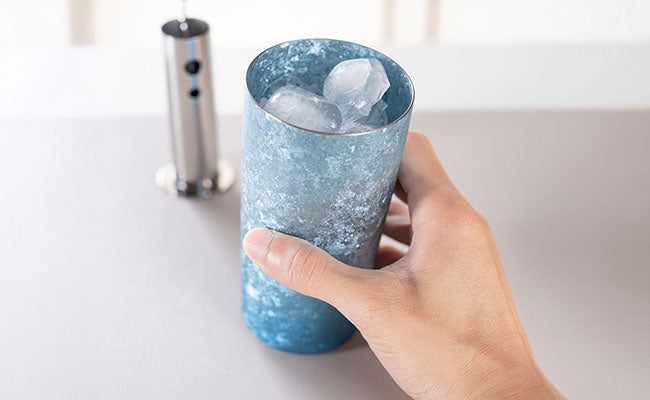


 A titanium tumbler usually costs noticeably more than a stainless steel one, so it’s fair to ask what you are actually paying for. The honest answer depends on what you want from a cup.
This guide compares the two materials on taste, weight, durability, insulation, and price, using the HORIE Kamazukuri as the example. It also says plainly who should choose titanium and who is better off with stainless steel.
Titanium vs. Stainless Steel: A Fair Comparison
Here is how the two materials compare at a glance.
| Feature | HORIE Kamazukuri | Stainless steel |
|---|---|---|
| Material | Pure titanium | Stainless steel |
| Structure | Double-wall tumbler | Varies by model |
| Insulation | No timed rating listed | Vacuum options available |
| Finish | Kamazukuri texture | Varies by model |
| Suggested use | Tabletop drinks and gifts | Lidded models for travel |
Taste. Both materials are food-safe. Titanium is more chemically inert, which is why many people find it cleaner with delicate drinks such as green tea, oolong, or plain water. If you have never noticed a metallic note in your current cup, the difference may be subtle.
Insulation. This is where stainless steel can come out ahead. If you need a drink to stay hot or cold for hours, a vacuum-insulated stainless bottle is the better tool. The Kamazukuri is built for the length of a drink: it keeps the outside comfortable to hold and slows temperature change.

Who Should Choose Titanium, and Who Shouldn’t
Titanium is a good fit if you:
- want a cup that stays out of the way of delicate flavors
- prefer something light that you’ll use daily at your desk, at the table, or on a picnic
- would rather own one long-lasting cup than replace several
- appreciate Japanese craftsmanship, or are choosing a gift
Stainless steel may suit you better if you:
- need a sealed, lidded flask that keeps drinks hot or cold all day
- want the lowest possible price
Using and Caring for Your Kamazukuri
How the double wall works. Two layers of titanium with a gap between them slow the transfer of heat. Your hand doesn’t feel the full heat of a hot coffee or the chill of iced tea, and there is little condensation on the outside.
Get more from it. Rinse with hot water before pouring a hot drink, or with cold water before an iced one. Handle it with care when it’s filled with very hot liquid.
What to pour. Coffee, green tea, and oolong let the flavor come through. Iced tea, sparkling water, and craft beer suit the chilled side.

Cleaning. Hand wash with warm water, mild dish soap, and a soft sponge. Avoid abrasive scrubbers and harsh detergents, which can dull the finish. Dry with a soft cloth.
Frequently Asked Questions
Does titanium taste like metal?
No. Titanium is chemically inert and doesn’t add a flavor of its own.
Is titanium safe for drinking?
Titanium is widely used in medical implants because the body tolerates it well, and it is chemically stable with everyday drinks.
Is it dishwasher safe?
Hand washing is recommended to protect the finish. [Confirm with HORIE.]
Can I use it in the microwave?
No. As with any metal cup, keep it out of the microwave.
Does the color wear off?
The colors come from anodizing, not paint, so they don’t peel or flake. As with any finish, avoid abrasive scrubbing.
Which size should I buy?
That depends on what you drink. Our size and color guide walks through 270ml, 350ml, and 400ml.
In conclusion: If you value flavor, light weight, and a cup made to last, titanium is worth the premium. If you need all-day insulation in a sealed flask, a vacuum-insulated stainless bottle is the better tool. Plenty of people keep both.
Ready to choose? Read our size and color guide, [HORIE Kamazukuri Series: What Makes This Titanium Tumbler Unique?], or browse the [HORIE Kamazukuri collection].
Related reading: [Beat the Heat: A Guide to Cold-Retention Tumblers]


Leave a comment
This site is protected by hCaptcha and the hCaptcha Privacy Policy and Terms of Service apply.